Should You Add or Adjust a Melt Pump? Answer These Five Quest
When you face extrusion instability and are considering installing a new melt pump or modifying your existing unit, do not rush into a decision. Work through five core questions first to identify the real root cause, then select the proper solution.
Question 1: Does thickness fluctuation correlate chronologically with upstream flow or pressure variation?
Check whether your product thickness changes synchronously with the fluctuation of upstream melt flow and pressure over time. If these curves match, the instability may stem from upstream feeding and plasticizing.
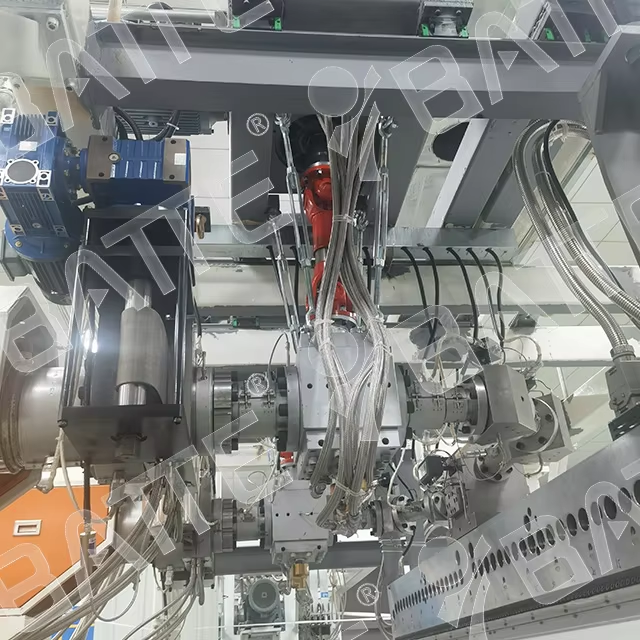
Question 2: Is your primary issue unstable total flow, or uneven distribution across the web width?
These two faults require completely different solutions. Unstable total flow shows oscillations of flow rate over time. Uneven distribution means inconsistent melt output along the transverse direction of the sheet or film. A melt pump mainly addresses total flow pulsation and cannot fully fix width-wise unevenness.
Question 3: Can the pump inlet get continuous, stable and qualified melt supply?
A melt pump relies on steady melt feeding at its inlet. If the incoming material is discontinuous or poorly filled, the pump cannot deliver stable output no matter how good the pump itself is. Continuous feeding, stable filling and qualified melt status are essential prerequisites.
Question 4: Do material viscosity, production rate range and downstream pressure match your current pump model and displacement?
Evaluate three key parameters: material viscosity, output range and die back pressure. Only when these factors match the pump’s specifications can the melt pump run within its proper working window. Mismatched parameters will lead to poor stability and shortened service life.
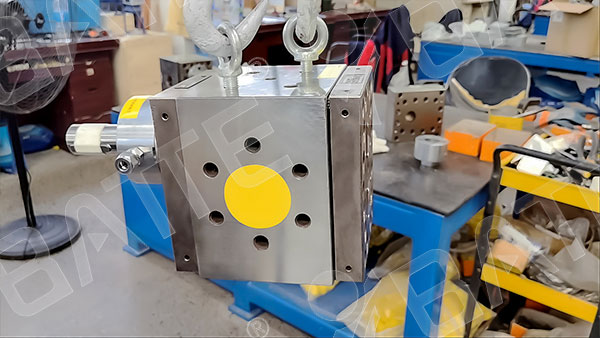
Question 5: Have obvious abnormalities of die, haul-off, cooling and thickness closed-loop control been ruled out?
Many thickness problems are not caused by melt feeding. You need to check and eliminate faults from the die head, traction system, cooling unit and thickness closed-loop control system first. These downstream factors can also create product defects.
After answering all five questions, you can make a clear decision: add a new melt pump, adjust the operating window of your existing melt pump, or prioritize troubleshooting other process sections.
In summary: Clarify these five questions before you decide whether to install a melt pump, tune the existing pump, or fix other process links first.
Email: sale@meltpump.com
WhatsApp: +86 158 3833 1071