How to choose the installation sequence of melt pump and scre
In the plastic extrusion production line, the melt pump and screen changer are two core supporting devices for melt conveying, filtering, and pressure stabilization.
The two have a clear division of labor: the screen changer is responsible for intercepting melt impurities and purifying the material; the melt pump is responsible for pressure stabilization and boosting, precise metering, and stable discharge.
Many extrusion plants and equipment technology improvement teams are struggling with a core issue: which comes first, the melt pump or the screen changer?
Currently, there are only two standard layouts in the extrusion industry, and there is no absolute right or wrong. The core lies in the adaptability of the production process.
Plan A: Extruder → Screen changer → Melt pump → Die head (mainstream and commonly used)
Plan B: Extruder → Melt Pump → Screen Changer → Die (for niche and special conditions)
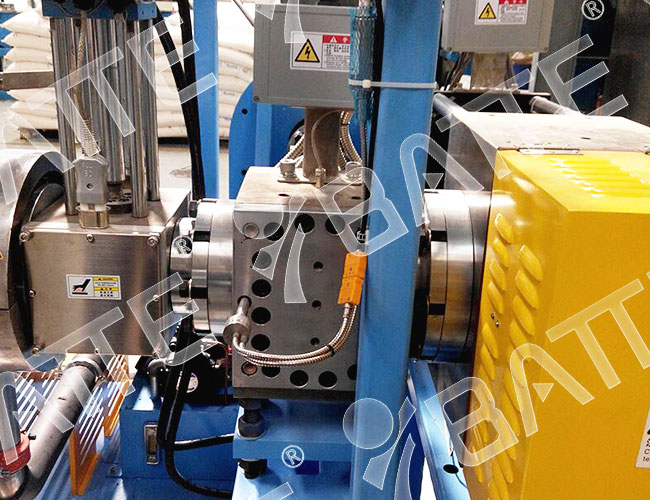
Why do 90% of high-end production lines choose "screen changer before, melt pump after"?
This is the standard layout for high-end production lines such as film, sheet, precision granulation, and chemical fiber spinning, and it is also the most reliable solution in engineering applications. There are three core advantages:
1. Pre-filtration for comprehensive protection of precision melt pumps
The melt pump is a high-precision positive displacement device, with core components such as gears, shaft sleeves, and side plates having extremely high machining precision, and demanding strict cleanliness of materials.
If impurities such as metal particles, carbon deposits, and unplasticized particles are mixed into the melt, they can directly cause gear wear, increased fit clearance, decreased metering accuracy, and significantly shorten the service life of the equipment.
The screen changer is placed upstream, enabling the early interception of all impurities. This allows for the purification of the melt before precise delivery and pressurization, thereby protecting the core precision structure of the melt pump from the root cause.
2. The melt state is more stable, resulting in higher equipment operation efficiency
After being filtered and purified, the melt exhibits more uniform purity and fluidity, enabling the melt pump to maintain stable volumetric efficiency, reduce wear, and lower equipment failure rates.
Especially suitable for working conditions with high impurity content, such as modified plastics, high-filling materials, and recycled materials, it significantly enhances the long-term operational stability of the equipment.
3. Isolate pressure fluctuations to maximize finished product precision
The process of screen changing will inevitably generate slight pressure fluctuations. By positioning the melt pump downstream, it is possible to perfectly isolate the extruder pulsations and screen changing pressure fluctuations, delivering a stable melt with constant pressure and flow to the die.
This is also the core reason why high-precision products such as BOPP, CPP film, precision sheet, and chemical fiber spinning must adopt this layout, which can effectively eliminate quality issues such as uneven thickness, film breakage, and yarn breakage.
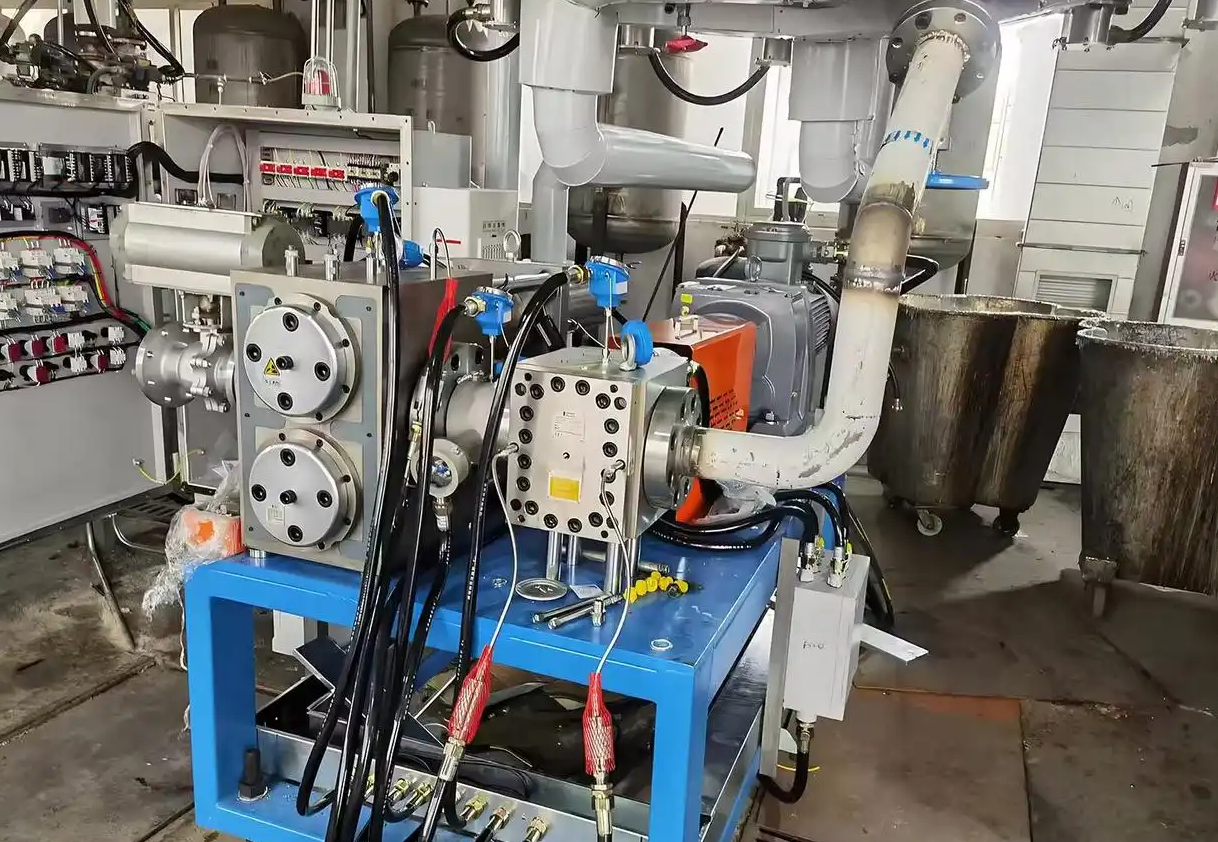
What scenarios are suitable for "melt pump in front, screen changer behind"?
This solution has limited application scenarios and is only compatible with certain special processes, making it not a general-purpose selection:
1. High purity and brand new material condition: The material contains almost no impurities, and the screen changer is only used as a backup filtration device for mold head protection;
2. Special polymerization process: For certain resin synthesis and high-viscosity material conveying production lines, the layout needs to be customized according to pipeline length and process pressure;
3. Operating conditions requiring mitigation of screen change pressure interference: Use the melt pump to stabilize pressure first, reducing the impact of pressure fluctuations caused by filter screen blockage.
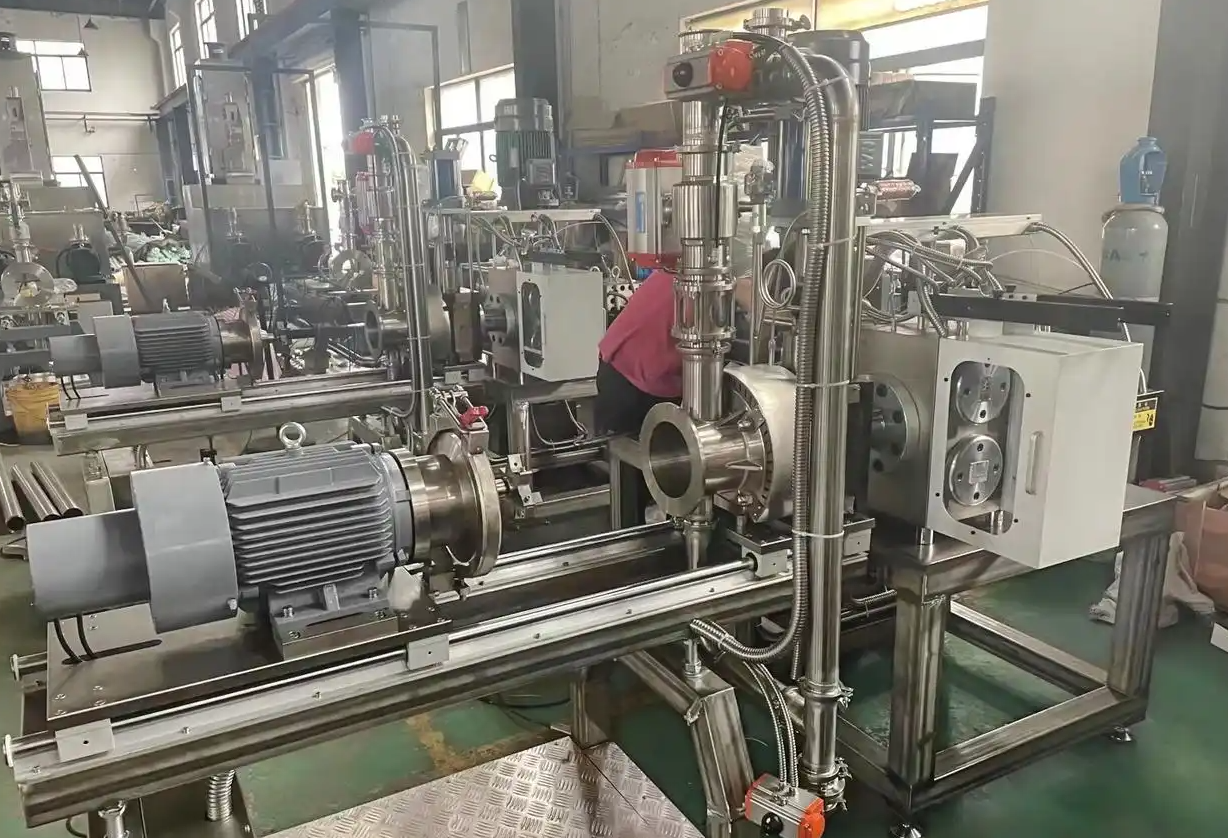
Core criteria for engineering model selection: select in order according to working conditions, without blindly copying
1. Check the impurity content of the material
Recycled materials, modified materials, and high-filler materials (with many impurities): Prioritize using a screen changer → melt pump to protect the precision pump body;
High-purity new materials and high-end polymer materials: Flexible adjustment according to the process.
2. Check the accuracy requirements of the finished product
For high-precision products such as thin films, optical materials, and chemical fiber spinning, it is essential to ensure absolute stability of the pressure at the die head. The optimal solution is to filter first and then stabilize the pressure.
3. Consider the type of screen changing equipment
The pressure drop and flow channel structure vary significantly among manual, single-column, double-column, and fan-shaped rotary screen changers. It is necessary to consider the on-site flow rate, pressure, and temperature parameters to comprehensively match the installation layout.
In most conventional extrusion scenarios, including film, sheet, tube, modified granulation, and chemical fiber production lines, the configuration of extruder → screen changer → melt pump → die is the most scientific, stable, and worry-free.
This layout combines four major advantages: pump protection, stable production, quality improvement, and cost reduction, and is suitable for over 90% of polymer extrusion conditions.
Unlike conventional special processes, there is no need to deliberately change the order, thus avoiding issues such as rapid equipment wear, large pressure fluctuations, and high rates of defective finished products.
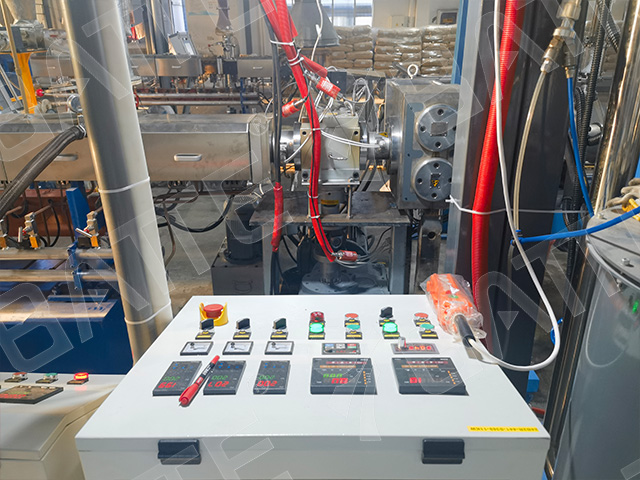
There is no absolute formula for the installation sequence of the melt pump and screen changer; it depends solely on the operational conditions.
In brief: For production lines with high impurity content, high precision, and long-term stable production, filtration should be carried out first, followed by pressure stabilization.
Zhengzhou Batte specializes in the research, development, and manufacturing of melt gear pumps, melt booster pumps, and high-end screen changing equipment. We can customize exclusive melt conveying and filtering solutions for various extrusion and polymerization production lines based on material characteristics, production capacity, pressure, and process requirements.
Email: sale@meltpump.com
WhatsApp: +86 158 3833 1071