What exactly is the purpose of a melt pump?
A melt gear pump is essentially a positive-displacement conveying device that uses a pair of precision-meshed gears to forcibly convey high-viscosity polymer melt from the low-pressure side to the high-pressure side. Its core functions are clear: pressurization, pressure stabilization, and metering.
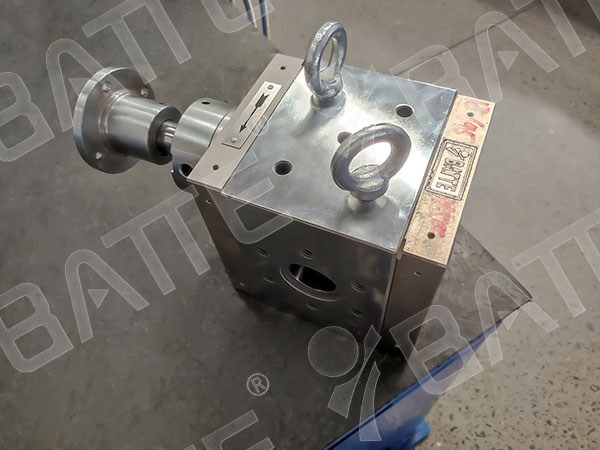
A common scenario on the production floor is that pressure fluctuations at the extruder outlet can range from 10% to 20% or more. After installing a melt gear pump, pressure fluctuations downstream of the pump can be controlled to within 1%. This improved stability is directly reflected in product thickness uniformity, with particularly significant improvements in applications sensitive to thickness tolerances, such as films and sheets.
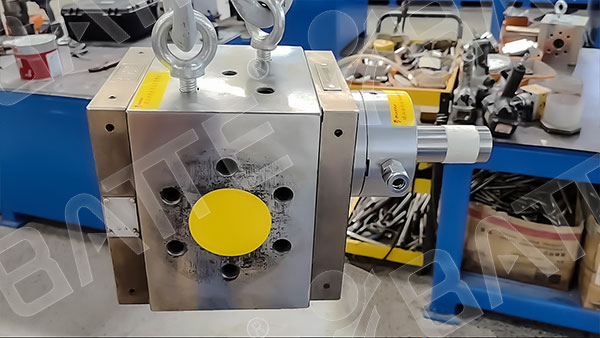
There is another often-overlooked benefit: once the melt gear pump takes over the pressure-building task, the extruder no longer bears the full pressure-building load, allowing the screw to focus more on plasticization and mixing. With the reduced load on the extruder, energy consumption decreases, and there is actually room for increased output. Actual data shows that installing a melt pump can increase extrusion output by 20% to 40% while reducing energy consumption by 10% to 20%. This investment clearly pays off.
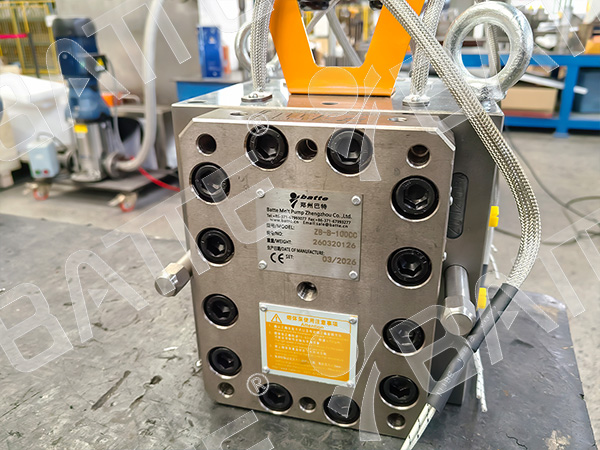
Whether in sheet, pipe, plate, film, pelletizing, or filament extrusion—the core function of a melt pump is to increase, stabilize, and meter pressure. After installing a melt pump, die pressure becomes stable, product thickness uniformity improves, and the extruder’s load is significantly reduced.
Email: sale@meltpump.com
WhatsApp: +86 158 3833 1071