What are the special requirements for melt pumps in PVC extru
PVC, as a typical thermosensitive polymer, has a very narrow processing window and has special requirements for the structure, material, temperature control, and operation of the melt pump that are much higher than those of ordinary PP/PE extrusion. The core design revolves around three major goals: inhibiting material degradation, resisting corrosion and abrasion, and ensuring precision and pressure stabilization.
Special requirements for structural design
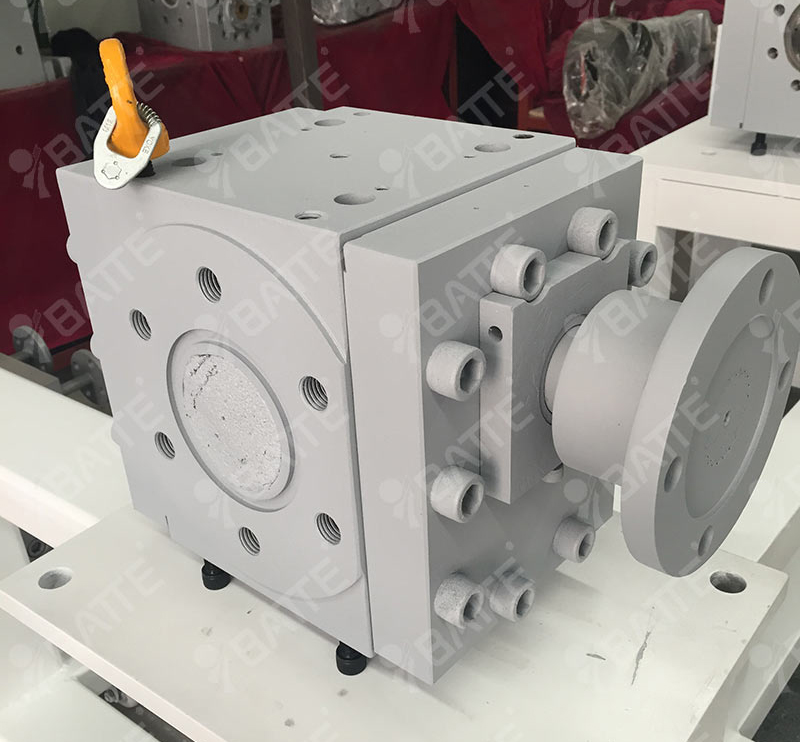
The internal flow channel adopts a large-diameter short flow channel and a streamlined design without dead corners, completely eliminating the dead corners of melt retention, compressing the residence time of PVC in the pump to the minimum, and avoiding local overheating that may cause dehydrochlorination degradation.
The gear adopts involute or asymmetric low shear tooth profile, which greatly reduces the melt shear rate, prevents the sudden rise of melt temperature caused by excessive shear, and reduces the risk of PVC yellowing and carbonization from the source.
The built-in melt self-lubricating system directly lubricates gears and shaft sleeves with a small amount of PVC melt. The lubricated melt enters downstream with the main material, completely eliminating the pollution of materials by external additives, and is suitable for the production of medical and food grade PVC products.
Special requirements for material adaptation
The core overcurrent components such as gears and pump bodies are made of duplex stainless steel or surface hardened alloy steel, with a surface hardness of HRC60 or higher, which can effectively resist the corrosion of trace amounts of hydrogen chloride gas released by PVC decomposition.
In response to the large amount of abrasive fillers such as calcium carbonate added to PVC formulations, the tooth surface roughness has been optimized to Ra ≤ 0.8 μ m, significantly improving wear resistance and extending equipment service life.
All seals are made of fluororubber or polytetrafluoroethylene material, which is fully resistant to hydrogen chloride corrosion and eliminates the problem of sealing failure and material leakage.
Special requirements for temperature control and performance
Adopting a zone independent precise temperature control system, the temperature difference of the pump is strictly controlled within ± 2 ℃, suitable for the narrow processing temperature range of PVC 150-200 ℃, to avoid material decomposition caused by local temperature exceeding the standard.
The gear mesh clearance is strictly controlled within 0.03~0.05mm, the volumetric efficiency can reach over 95%, and the outlet pressure fluctuation is controlled within ± 0.5MPa, ensuring that the PVC pipe wall thickness tolerance is stable within the national standard requirement range of ± 0.1mm.
Adopting a low-speed design, the conventional operating speed is controlled within the range of 10~50rpm to avoid shear heat generation caused by high speeds. At the same time, it is equipped with a variable frequency drive and supports closed-loop control in conjunction with the extruder DCS system.
Special requirements for maintenance operations
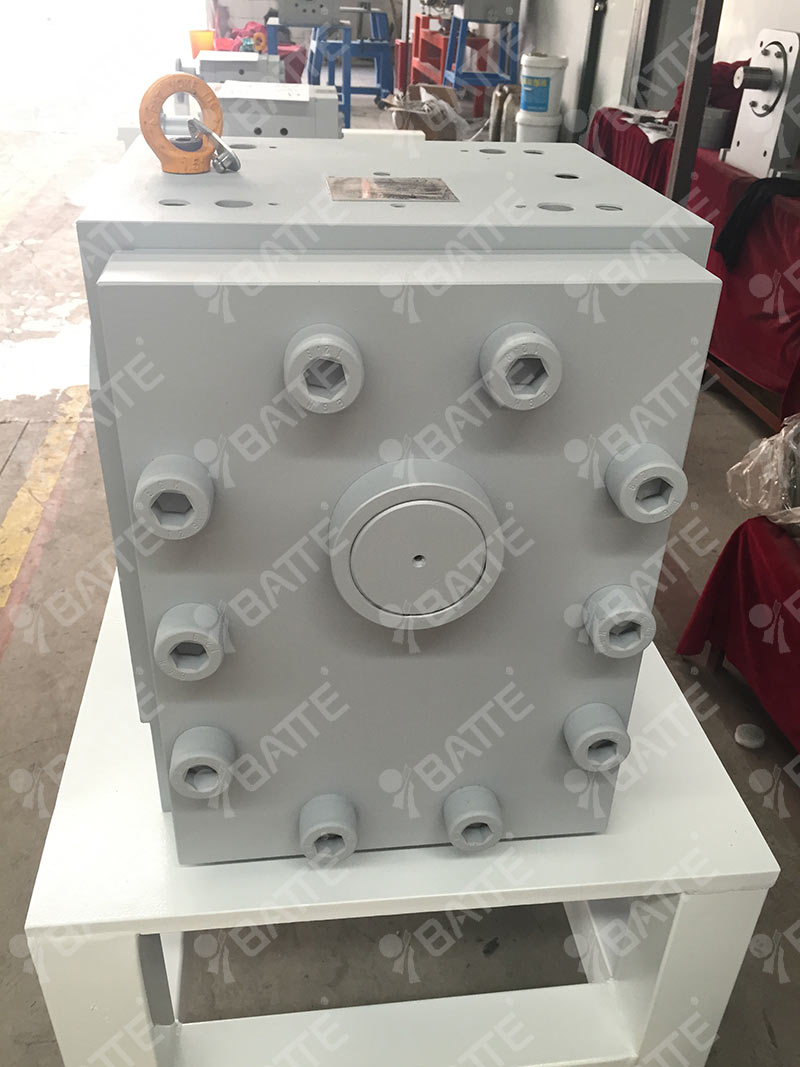
Before starting up, the entire pump body must be preheated to the process temperature to confirm that the gear rotation is not stuck or lagging. First, run it at a very low speed of 5-10 rpm for 5-10 minutes, and then gradually increase the speed. It is absolutely forbidden to start it forcibly in a cold state.
If a single shutdown lasts for more than 4 hours, the residual PVC melt in the pump must be completely replaced and emptied with clean low-density PE material to prevent the material from cooling and solidifying, and from carbonization due to prolonged heating. The next startup may directly damage the gears.
It is strictly prohibited to use ordinary metal wires to pass through the flow channel in daily operation and maintenance, in order to avoid scratching the surface of the mirror flow channel and causing new materials to be trapped in dead corners; Before starting each shift, it is necessary to first check the flexibility of the gear rotation and confirm that there are no abnormalities before starting the main engine.
Email: sale@meltpump.com
WhatsApp: +86 158 3833 1071